
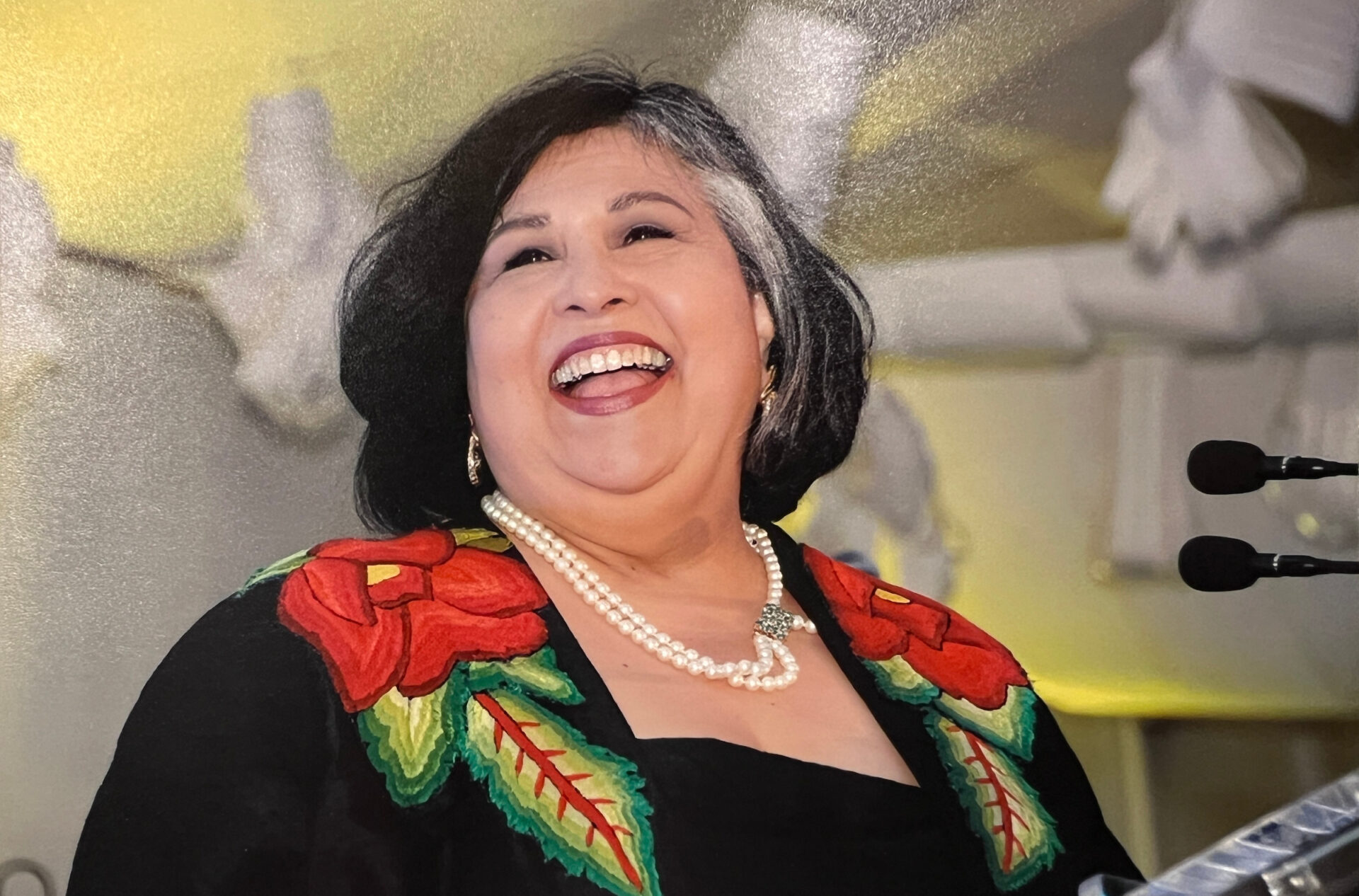
At a young age Gloria learned lessons that would shape the rest of her life, “sometimes you have to fight for what is right and you need to speak up for those who can’t.” These principles were instilled in her by her parents, Leonardo and Concepción, along with her nine siblings, Gracie, Irma, Domingo, Bertha, Mario, Sergio, Danny, Olga, and Lisa.
Gloria’s activism was sparked by the Chicano movement and drive for women’s empowerment. She taught vocational skills at East LA Skills Center, founded Comisión Femenil Mexicana Nacional, and strongly advocated for women’s health.
Her public service began during President Jimmy Carter’s Administration where she served as a Deputy for Presidential Personnel and later in San Francisco’s Department of Health and Human Services. She returned to Los Angeles to help Latinos get elected, soon launching her own campaign.
Gloria was a “woman of firsts” – first Latina in history to be elected to the California State Assembly, the first Latina Los Angeles City Council member, and first woman elected to the Los Angeles County Board of Supervisors. Being the first came with the duty and responsibility to always fight for the community, no matter how difficult the odds, and always with a strong sense of ethics and integrity.
Gloria was proud of her many achievements, but she was most proud of her role of mother to her daughter, Valentina, who she raised with her husband Ron. Later her love grew to include her son-in-law Brandon and her grandson, Santiago, who she lovingly called Santi.
She understood the plight of the Mothers of East Los Angeles, a group formed to organize against a proposed plan to build a prison in East LA. She raised the necessary awareness and community support that led to the proposal’s defeat.
During her 23 years on the Los Angeles County Board of Supervisors, she became known as a fiscal watchdog committed to governance reforms, protecting the county’s public health care system from fiscal collapse, and fighting for quality-of-life issues for millions of residents. She was unwavering in her tenacity in fighting for the replacement of LAC+USC Medical Center, extension of Metro’s Gold Line to East Los Angeles and the improvement of libraries and parks, including Grand Park.
A true convener, she loved hosting gatherings at her home to celebrate her Mexican American culture, traditions, and food, including making tamales. She cherished and meticulously planned her family’s and staff’s holiday gatherings and looked forward to celebrating birthdays with her loyal group of amigas who provided her with a source of strength and support.
She had a spiritual connection to her grandmother, visiting her ancestral hometown often. She secured her grandmother’s legacy by restoring her abuelita’s ranchito in Casas Grandes, Chihuahua. Gloria’s spiritual journey inspired her to walk El Camino de Santiago twice.
Gloria also loved sewing which transitioned into quilting. Her considerable skill became an artform. Her passion for quilting also transformed into a new outlet for her activism. She founded a quilting group she aptly named, The East LA Stitchers (TELAS), to introduce others to the tradition of quilting with Latina inspirations.
Recognizing the power of storytelling through art, Gloria founded the historical museum LA Plaza de Cultura y Artes and the Eastside Arts Initiative, providing much needed financial support to community-based art organizations and artists.
Gloria’s unwavering advocacy for our community inspires us. She was a trailblazer, opening doors for future generations of women and Latinas. Her profound influence extends far beyond the boundaries of Los Angeles. Her legacy resonates as a powerful force reminding us to step up, make a difference, fight for social justice and equity, and to always lead with passion, integrity, and love.